
What Is Legal Operations?
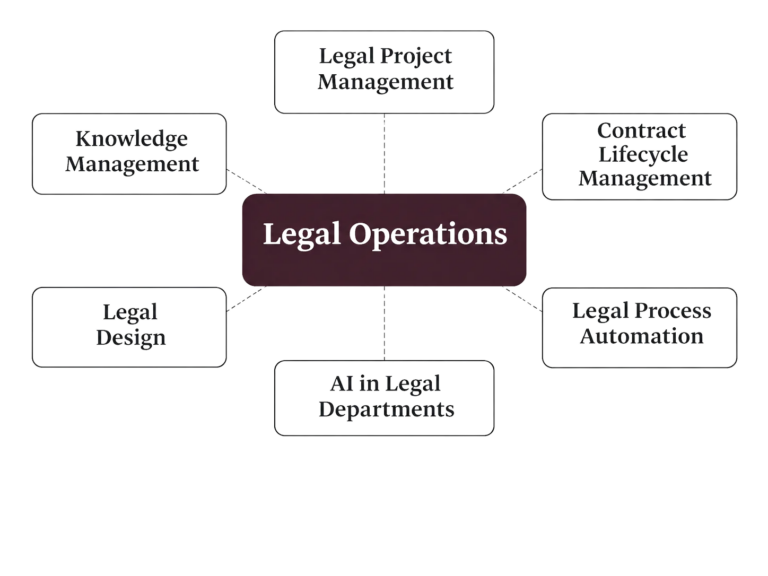
Legal Operations, often referred to as Legal Ops, describes the strategic and operational management of legal services. It brings together business management, process optimisation, technology and legal expertise to improve how legal work is organised and delivered.
Rather than focusing on individual legal questions, Legal Operations looks at the bigger picture: How can legal services be delivered more efficiently? Which tasks require legal expertise? Where are resources being wasted, and how can technology support existing workflows?
The objective is to create a legal function that operates efficiently, adapts to changing business needs and allows lawyers to focus on their core responsibilities.
What Does a Legal Operations Manager Do?
The role of a Legal Operations Manager is remarkably diverse. Depending on the organisation, responsibilities may range from budget management and the coordination of external law firms to contract management, process optimisation and the implementation of new technologies.
Legal Operations Managers also analyse how legal departments perform, identify organisational weaknesses and develop strategies for improvement. They frequently act as an interface between the legal department and other business functions, such as IT, finance and human resources.
What makes this profession particularly interesting is its interdisciplinary nature. Legal knowledge can be valuable, but project management, analytical thinking, business understanding and technological literacy are equally relevant.
People, Processes and Technology
At the heart of Legal Operations lies the interaction between three elements: people, processes and technology.
People contribute expertise, define responsibilities and drive organisational change. Processes determine how tasks are structured, assigned and completed. Technology supports these processes through digital tools, automation and data analysis.
Consider a legal department that regularly receives requests to draft standard contracts. Instead of processing every request manually, the department could introduce standardised templates, establish clear approval procedures and implement a digital self-service platform.
Lawyers would remain responsible for complex legal questions, whilst routine requests could be handled more efficiently.
The important lesson here is that technology alone cannot solve organisational problems. Even the most sophisticated AI tool will struggle to deliver meaningful improvements if responsibilities remain unclear or underlying processes are poorly designed.
Legal Operations and the Role of AI
Artificial intelligence opens up additional opportunities for Legal Operations, from automated document analysis and intelligent contract management to knowledge management and workflow automation.
However, successful implementation requires more than selecting the right software. It involves understanding business needs, managing risks, training employees and establishing appropriate oversight.
This is precisely where Legal Operations can contribute.
Final Thoughts
Legal Operations represents a broader understanding of what legal work entails. It recognises that the quality of legal services depends not only on legal expertise but also on how that expertise is organised, supported and delivered.
For the next generation of legal professionals, this creates interesting opportunities beyond traditional career paths. Understanding how law, business and technology interact could become one of the most valuable skills in the modern legal profession.
Sources & References
- Corporate Legal Operations Consortium (CLOC): Core 12 Framework: https://cloc.org/cloc-core-12/?
- ACC Legal OperationsMaturity Model: https://www.acc.com/sites/default/files/resources/upload/MM2.0-Booklet-DIGITAL%20Final.pdf?
- American Bar Association (ABA): Legal Operations Management Helps In-House Counsel Translate Vision into Value: https://www.americanbar.org/groups/gpsolo/resources/magazine/2025-sep-oct/legal-operations-in-house-counsel-translate-vision-value/?